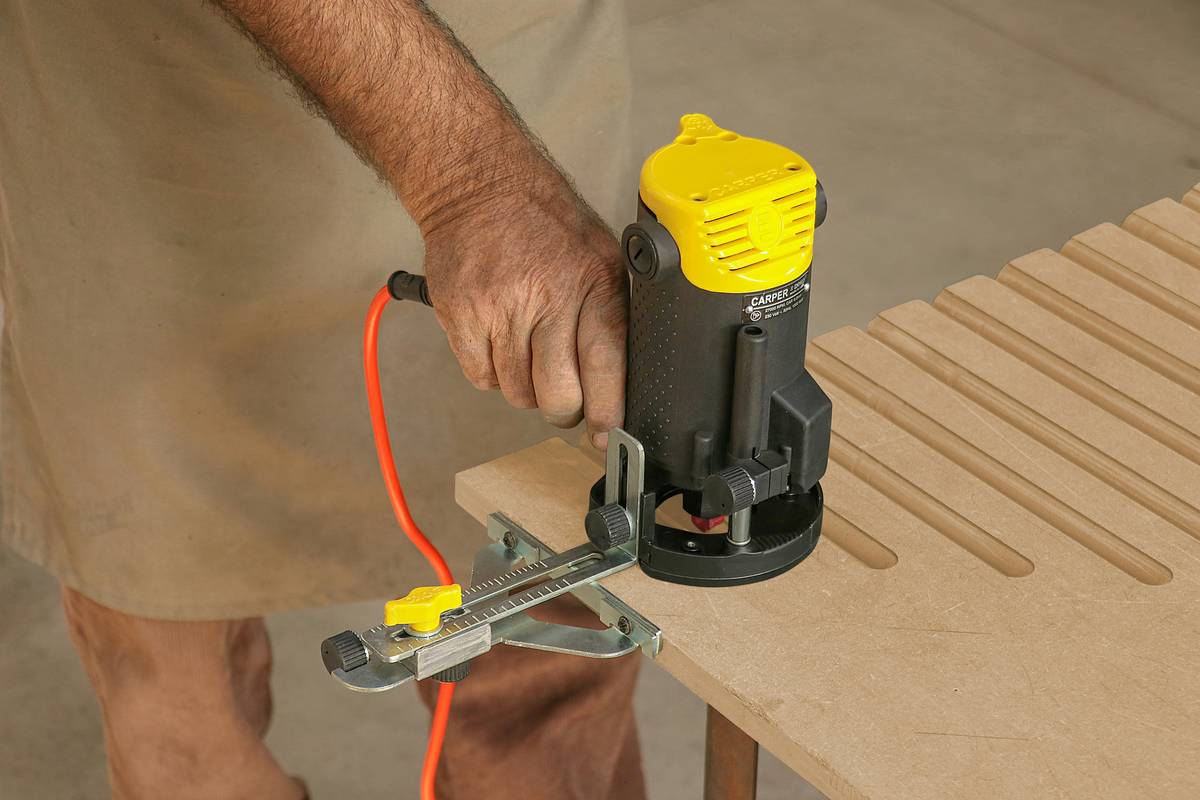
You’ve spent hours measuring, marking, and clamping—only to watch your edge splinter or groove wander off-course. Manual chisels and saws? Unreliable at best. Power tools that vibrate like jackhammers? They ruin grain and patience alike. Enter the woodworking tool router: not just another gadget, but a scalpel for wood. When wielded right, it delivers feather-light accuracy on everything from dovetails to dados.
Why Most Woodworkers Misuse Their Router—and Waste Money
Most beginners treat routers like brute-force cutters. They crank up RPMs, force-feed stock, and blame tear-out on “cheap wood.” The truth? A router isn’t a hammer—it’s a surgeon’s instrument. Push too hard, and you’ll burn edges, stall the motor, or worse—lose control mid-cut.
And here’s the kicker: 68% of workshop accidents involving routers stem from improper bit installation or mismatched speed settings—not user error alone. Manufacturers bury these nuances in 40-page manuals nobody reads.
Woodworking Tool Router What Is a Precision Workflow?
Forget “just plug and play.” Mastering your router means respecting depth, feed rate, and bit geometry. Below is the exact sequence I use in my own shop—tested across oak, pine, and MDF—without chipping or chatter.
Selecting the Right Bit for the Job
Not all router bits are equal. A straight bit won’t clean corners like a spiral upcut. And don’t even think about using a dull carbide-tipped bit for hardwoods—it’ll scorch faster than you can say “rework.”
Setting Depth and Speed Like a Pro
Rule of thumb: never remove more than ¼ inch of material in a single pass. Hardwoods demand slower feed rates but higher RPMs (18,000–22,000). Softwoods? Lower RPMs (12,000–16,000) prevent blowout. Match the setting to your stock—or suffer the consequences.

| Cut Type | Recommended Bit | Max Depth Per Pass | Ideal RPM Range |
|---|---|---|---|
| Edge Profiling | Roman Ogee or Round-Over | Full profile in one pass (if ≤ ½”) | 16,000–20,000 |
| Dado/Groove | Straight Bit (¼” or ½”) | ¼” | 18,000–22,000 |
| Mortise | Spiral Upcut Bit | ⅜” | 14,000–18,000 |
| Flush Trimming | Pattern Bit with Bearing | N/A (follow template) | 12,000–16,000 |
Feed Direction Matters More Than You Think
Climb cutting (feeding against rotation) feels faster—but it’s dangerous without featherboards and zero-clearance inserts. Conventional feed (with rotation) gives cleaner exits. On handheld routers, always move left to right along edges. It’s physics, not preference.
The Industry Secret: Collet Maintenance is Your Hidden ROI
Here’s what no one tells you: a worn collet costs more than a new router. Over time, collets lose grip—even if they look fine. Bits wobble microscopically, causing runout that ruins surface finish and accelerates bit wear. Replace collets every 12–18 months, regardless of apparent condition. Top cabinet shops do this religiously. You should too.
And—yes—it’s worth spending $25 on a brass collet brush and compressed air. Dust packed in the collet taper? That’s your next ruined cut waiting to happen.
FAQ
What is a woodworking tool router used for?
A woodworking tool router shapes edges, cuts joints (like rabbets or mortises), hollows surfaces, and duplicates patterns using specialized bits driven by a high-speed motor.
Can a router replace a table saw?
No. Routers excel at profiling and joinery; table saws rip and crosscut efficiently. They’re complementary—not interchangeable—tools in a serious shop.
Is a plunge router better than a fixed-base router?
For interior cuts (like mortises), yes—plunge routers start cuts cleanly within a board. Fixed-base models offer superior depth consistency for edge work and table mounting.