You’ve spent hours sketching your project—only to watch it get ruined by a wobbly cut, inconsistent depth, or tool chatter. Frustrating? Absolutely. Traditional handheld routers offer control but demand superhuman steadiness. Table-mounted units help—but lack flexibility for complex profiles. Enter the woodworking tool router top rated cnc: where digital precision meets analog craftsmanship. And suddenly, those flawless dados, intricate inlays, and seamless joinery aren’t just possible—they’re repeatable.
Why “Good Enough” Routing Sabotages Your Projects
Most woodworkers assume a decent bit and steady hand are all they need. They’re wrong. Even high-end manual routers suffer from user-induced variance—especially on curved cuts or multi-pass operations. One slip in feed rate? You burn the wood. Slight tilt? Your edge profile warps mid-run. And forget about scaling production; duplicating a piece by hand introduces cumulative error. The truth? Human hands aren’t built for micron-level consistency. Machines are.
But—and this is critical—not all CNC routers solve this problem equally. Many “desktop” models marketed to hobbyists use plastic gantries, underpowered spindles, and open-loop stepper systems that lose steps under load. You end up with ghost offsets, chatter marks, or worse—crashed bits mid-job.
Choosing & Using the Woodworking Tool Router Top Rated CNC: A Real-World Blueprint
Forget theoretical specs. What actually matters on the shop floor?
Spindle vs. Router Motor: The Hidden Bottleneck
A standard 1.25 HP trim router motor might spin fast, but it lacks torque at low RPMs—essential for hardwoods. Industrial air-cooled spindles (even 800W ones) deliver constant torque across speed ranges. That’s why shops making custom cabinetry swear by them. VFD-controlled spindles also let you match RPM to material—maple at 12,000 RPM, MDF at 18,000.
Frame Rigidity Isn’t Optional—It’s Everything
If your machine flexes during a climb cut, no amount of software calibration fixes it. Look for welded steel frames or extruded aluminum with dual-rail Y-axes. Avoid bolt-together kits unless they use linear rails—not rods-and-bearings. One pro trick: tap the frame with a wrench. A dull *thud* means rigidity; a tinny *ping* means vibration city.
Software That Doesn’t Fight You
Some CNC ecosystems lock you into proprietary CAD/CAM suites that cost $2,000/year. Open-source options like Fusion 360 (free for hobbyists) or Carbide Create integrate cleanly with GRBL or LinuxCNC controllers. Just ensure your post-processor matches your machine’s G-code dialect—or you’ll waste hours debugging phantom errors.
| Feature | Budget CNC (<$1,000) | MID-TIER (<$3,000) | PRO-GRADE (>$5,000) |
|---|---|---|---|
| Spindle Type | Modified Trim Router | 800W Air-Cooled Spindle | 2.2kW Water-Cooled Spindle |
| Frame Material | Acrylic/Plastic | Extruded Aluminum | Welded Steel |
| Max Working Area | 12″ x 12″ | 24″ x 24″ | 48″ x 96″+ |
| Repeatable Accuracy | ±0.010″ | ±0.003″ | ±0.001″ |
| Ideal For | Signs, Simple Carvings | Furniture Parts, Inlays | Cabinetry, Production Runs |

The Industry Secret: It’s Not About the Machine—It’s About the Workflow
Top-tier shops don’t obsess over brand names. They engineer workflows around their CNC. Example: instead of routing final edges in one pass, they rough-cut on the CNC, then finish with a flush-trim bit on a table router. Why? Because even the best spindle leaves microscopic scallops on tight radii. Hand-finishing the last 0.020” eliminates that without sacrificing speed. Another secret: vacuum spoilboards > clamps. Once dialed in, you never fight part movement again—and you reclaim 70% of your setup time.
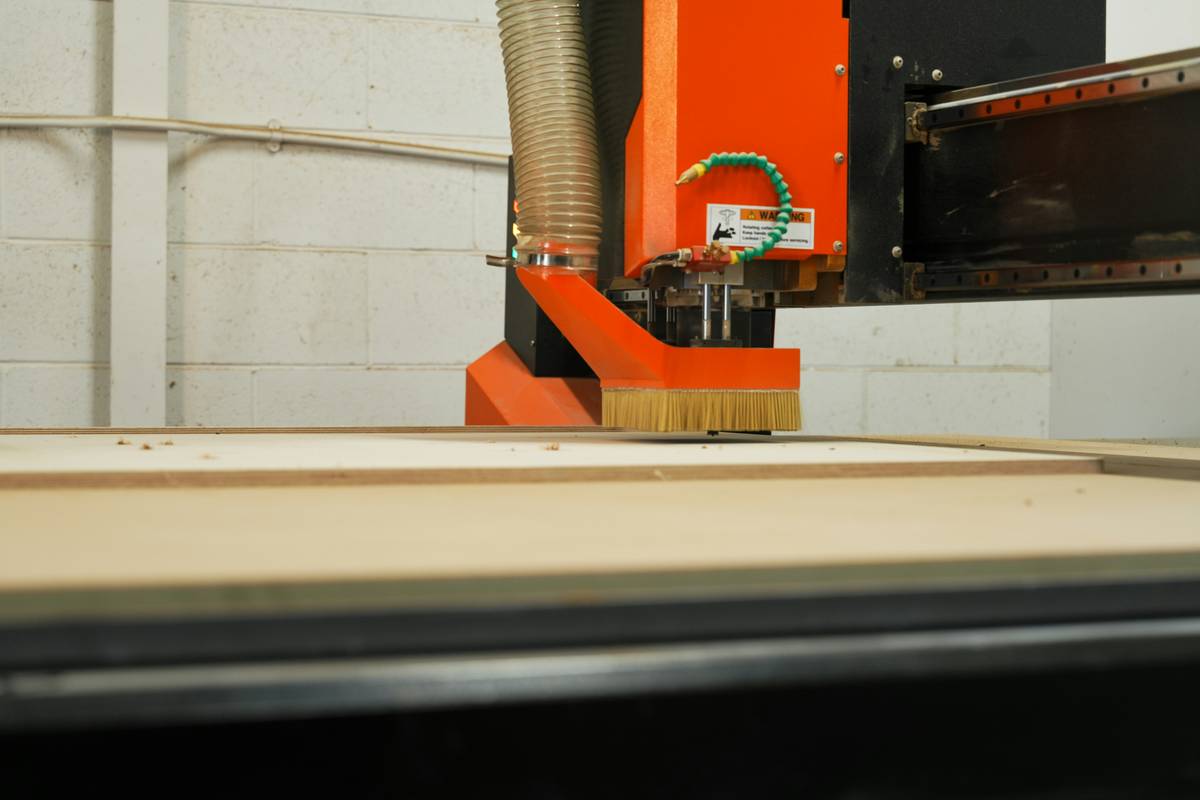
And here’s what no brochure tells you: dust extraction makes or breaks longevity. Fine particles infiltrate linear bearings and spindle collets. A cyclone separator paired with a 1.5 HP shop vac isn’t luxury—it’s preventative maintenance. Skip it, and your “top rated” machine becomes a paperweight in 18 months.
FAQ
Can I use regular router bits in a CNC woodworking machine?
Yes—but only if they’re rated for high-RPM continuous use. Standard carbide-tipped bits may shatter above 18,000 RPM. Always verify max speed ratings.
How much workshop space does a top-rated CNC router need?
Add at least 2 feet of clearance on all sides. A 24″x24″ machine needs a 4’x4′ footprint minimum for safe material handling.
Is software included with most woodworking CNC routers?
Often basic control software is bundled, but advanced CAM features usually cost extra. Verify open-source compatibility before buying.